

Fostering Foundational Science: Colourful Science in the Early Years
Introduction
Introducing young children to the concepts of colour and light lays a strong foundation for early science education and nurtures their natural curiosity about the world.
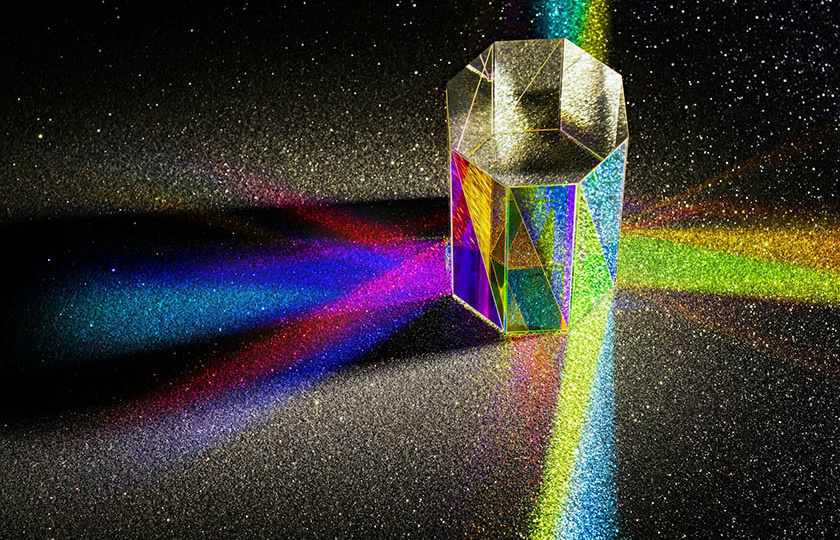
Colours are all around children in nature and synthetic materials. Therefore, colours are one of the earliest classification systems that parents teach their children and the foundational concepts in early science (Ashbrook, 2008). Children’s ability to distinguish colours typically develops education between ages 2 and 4, with increasing precision in naming and categorising colours (Franklin et al., 2008). Franklin et al. (2008) found that infants perceive colour categorically before they acquire language, but as children develop, language increasingly shapes and refines their colour perception, influencing how they cognitively process and describe colours.
Incorporating colour and light explorations into early childhood education not only enriches children's scientific understanding but also nurtures creativity, curiosity, and critical thinking. Through playful, hands-on activities and STEAM-based investigations, children begin to make sense of the world around them, laying the groundwork for lifelong learning and a deeper appreciation of science in everyday life.
Concepts of Light & Colours in Early Childhood
Every environment that a child encounters contains an abundance of colourful materials, which can be used as a means of engaging and triggering children’s curiosity about light and colour. Initial conversations with young children about all the colours around them, their likes and dislikes, colour choices and why colours are used is a great starting point developing children’s awareness of the world and the changing world around them, the multiplicity of colours in the natural world (from season to season and from habitat to habitat) and built environment (Showell, 1979).
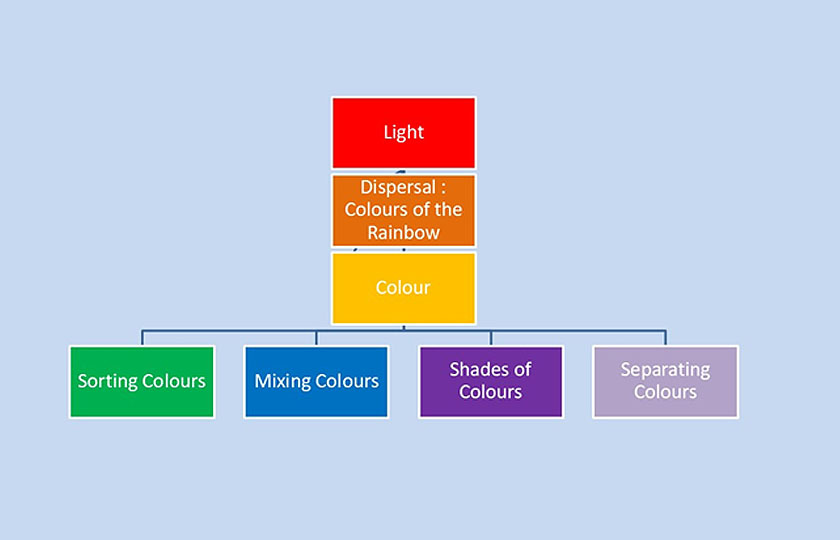
The key scientific concepts that can be explored about colour in the early years include:
- Colour Recognition: Comparing, sorting and classifying
- Mixing Colours: Primary and secondary colours
- Dispersion of Light: Rainbows, prisms
- Separating Colours: Chromatography
Colour Recognition: Comparing, Sorting and Classifying
Providing children with a variety of different sensory experiences involving coloured beads/blocks, acetate sheets, coloured transparent shapes, coloured water, colour paddles etc. supports inquiry-based science. During free-play you can ask the children a variety of open-ended questions to encourage prediction, observation, sorting, classifying and explanation (language development), such as "Can you find... What do you notice... Are they similar... Can you sort... Why did you... Can you make a picture using red and yellow pieces... Can you describe... Have you seen this colour before?... Do you like this colour? Why?”. You can also move onto ‘remembered observations’ inviting the children to talk about colours they may have seen at home, colours on their favourite toys, in their kitchen etc.
The children can then explore colour further during specific science activities, investigating further their observations during their initial free play activities. Below you will find some examples of activities that can be carried out to consolidate the children’s learning further around colour. These activities link with the Aistear Curriculum focusing on Exploring & Thinking: Sorting, comparing, predicting; Communicating: Describing colours, expressing ideas; Identity & Belonging: Sharing personal preferences and stories and Well-being: Engaging in calm, focused play.
Colour Explorations
Colour Sorting Challenge
Children sort different coloured objects according to colour. Extend by sorting into shades of each colour (light green/dark green etc.)
Shape & Colour Matching
Match coloured objects to coloured paper backgrounds.
Pattern Creation
Create repeating patterns using coloured transparent objects (on white paper or a light box). Encourage children to describe and extend the pattern.
Colour Collage
Use coloured paper of different consistencies (translucent, transparent, Opaque) to create a collaborative mural/collage/art piece.
Storytelling with Colours
Children build a scene using coloured transparent shapes and coloured paper. They tell a story based on the colours and shapes they used.
Mixing Colours: Primary & Secondary Colours
Colour mixing activities are central to understanding colour theory, exploring how primary colours (red, yellow, blue) are used to create secondary colours (orange, green, purple). These experiences also help children recognise that colours can change gradually into another.
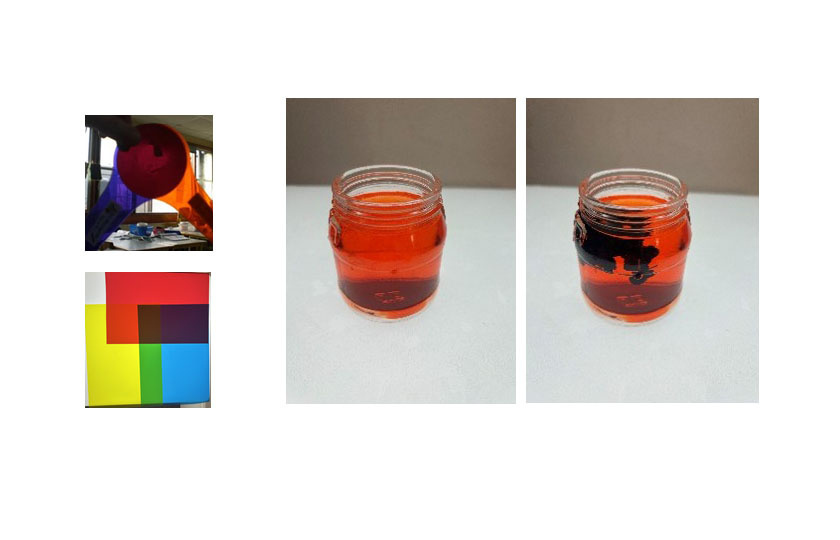
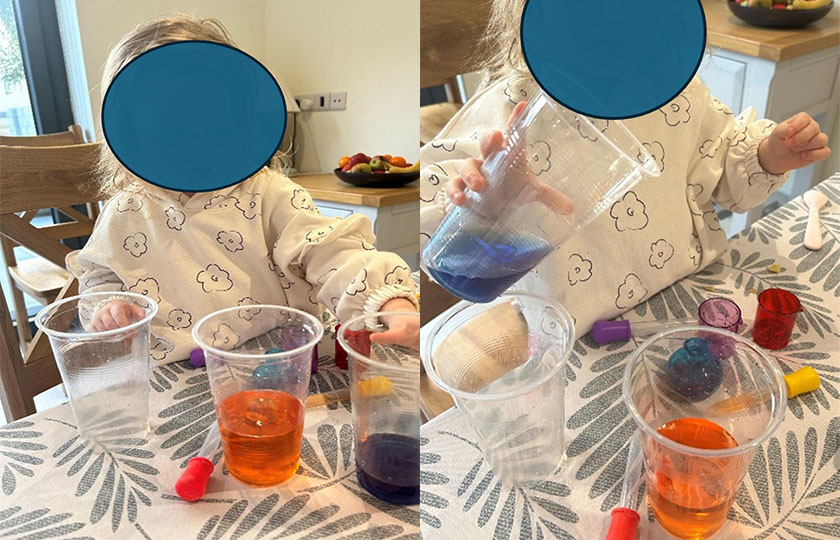
Colour mixing activities using resources such as paints, coloured water, coloured ice, playdoh, and food colouring provides children with the opportunity to explore colour through sensory experiences. Colour paddles/pieces of coloured acetates allow children to predict colour combinations, before investigating their predictions. During such explorations you could ask children “How do we make the colours darker?.... How do we make them lighter?.... What does a ‘different shade of green’ mean?…. Can we make different shades of green?…. What happens when we mix two different colours?”
Referring to various hues as reddish-purple or greenish-blue can also raise children’s awareness that the colours make up a spectrum, preparing them to understand in later years that the spectrum stretches further than we can see (Ashbrook, 2008).
Dispersion of Light: Rainbows, prisms
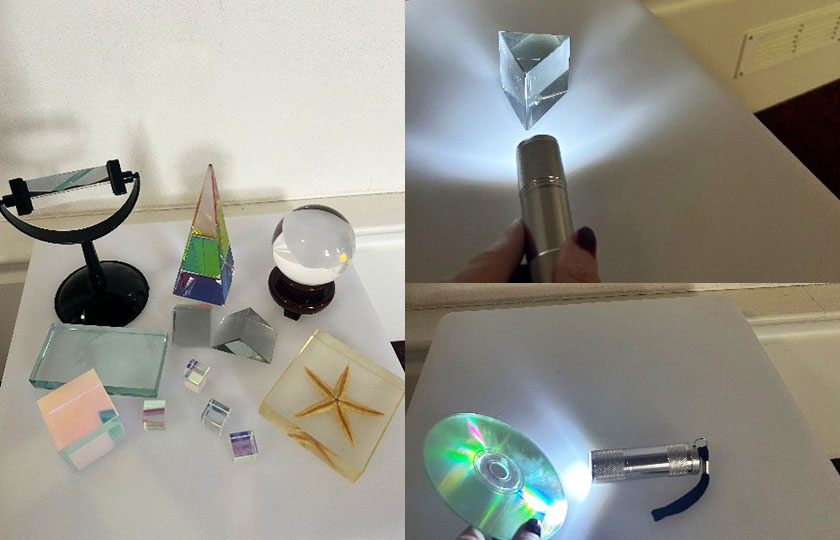
When exploring colours to develop a spiral approach to children’s explorations of colour and light, you could explore the dispersion of white light. Allow children time to shine a light from a torch through a variety of transparent materials. The image below provides some examples that you may have.
Using a Prism/CD
If you have prism and/or a CD, give the children time to hold them up in the light and observe what happens. Ask questions such as “What materials is the prism/cd made of? What do you notice about the prism/CD when you hold it up in the light? When you look through the prism/look at the CD what do you see? Can you see any reflections or patterns inside the prism/ on the CD?”. Now ask the children to shine a torch light through the prisms/at the CD (Figure 5). You could then encourage the children to explore further by asking “What do you see happening when light goes through the prism/hits the CD? What colours do you see? What does it remind you of? (A rainbow) Where are the colours coming from?”
Rainbows
White light is made up of all the colours of the rainbow. You can split white light into all the different colours of the rainbow when it passes through a material like a prism or water. This is called dispersion. When the light hits the shiny underside of a CD, the light reflects in a different way. All the colours reflect but each one bounces off in a different direction. The different colours spread out to form the colour spectrum.
The children will have seen all the colours of the rainbow during the experiment using a prism and/or a CD. You could now ask them, “I wonder could we make a rainbow? When do you usually see a rainbow? What do you think we would need to the make the rainbow here in this room?”
For this activity set up a container of water, mirror and torch as below. The mirror will shine the colours of the rainbow onto a surface that it is facing.
When you see a rainbow you are seeing rays of light from the sun passing through drops of water (that act like a prism), bending and dispersing (separating) the sunlight into its component colours (colours of the rainbow) when it passes through the rain drops.
Separating Colours: Chromatography
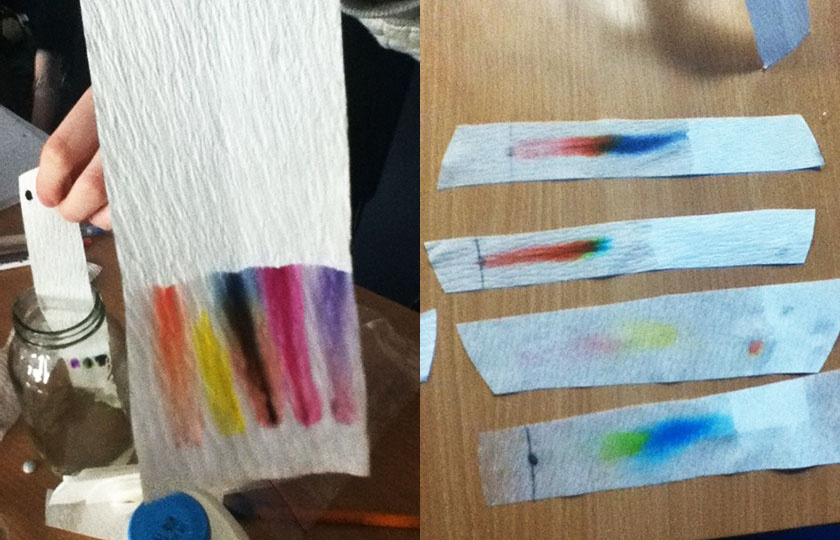
Chromatography activities offer a playful and hands-on way for children to explore how colours separate and move through paper. Using simple, everyday materials like coffee filters or bun cases, washable markers, and water, children can observe vibrant patterns emerge as the colours travel. These activities not only ignite curiosity but also help develop observation skills and introduce foundational scientific concepts in an age-appropriate and visually captivating way.
STEAM Activities
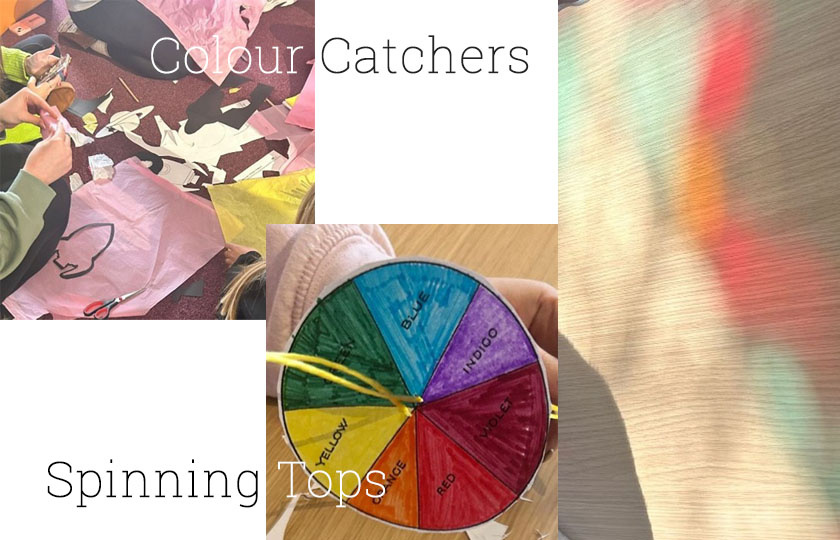
STEAM activities provide a rich and creative way for children to consolidate their understanding of light and colours through hands-on exploration. Designing and creating window stencils or sun catchers allows children to experiment with colour mixing, and how light passes through different materials, exploring properties of materials that are translucent, transparent and opaque. Similarly, creating spinning tops allows children to observe how colours blend when in motion, reinforcing concepts of colour theory and visual perception. These integrated activities not only support scientific learning but also encourage artistic expression, problem-solving, and fine motor development.
STEAM Activity & Design Criteria
1. Design and create a window stencil or sun catcher
It must include a material that:
- Lets the light through (transparent)
- That lets some light through (Translucent)
- Does not let any light through (Opaque)
2. Design and create a spinning top
It must:
- Be a circle shape
- Contain all the colours of the rainbow
3. Design and build a colorful lampshade of any shape for a baby’s nursery
It must:
- Contain calming colours
- Not be too bright
4. Design and build a model glasshouse to grow strawberries
It must:
- Allow a lot of light through to the strawberries
- Also contain a shade that can cover the strawberries during very hot weather to prevent high heat damage
References & Authors
References
Ashbrook, P. (2008). Color Investigations. The Early Years: Resources and conversation on PreK to 2 science, Science & Children, October, 2008, 14-16.
Brandling, R. (1992). Science topics for infants. UK: Simon & Schuster Education.
Brunton, P., & Thornton, L. (2009). Science in the early years: Building firm foundations from birth to five. UK: SAGE Publications Ltd.
Showell, R. (1979). Teaching science to infants. UK: Ward Lock Educational Co. Ltd.
Sullivan, P. T., Carsten Conner, L. D., Guthrie, M., Pompea, S., Tsurusaki, B. K., & Tzou, C. (2017). Colorful chemistry: A STEAM activity has students paint with the power of chemical reactions. Science and Children, 54(8), 34–40.
Authors
-
Dr Maeve Liston, Director of Enterprise and Community Engagement, Associate Professor in Science Education, MIC
-
Dr Eleanor Walsh, STEM Outreach Manager, CRAFT, MIC
- Introduction
- Concepts of Light & Colours in Early Childhood
- Mixing Colours: Primary & Secondary Colours
- Dispersion of Light: Rainbows, prisms
- Separating Colours: Chromatography
- STEAM Activities
- References & Authors